
Key Points
- Researchers used low-intensity focused ultrasound to release a chemotherapy drug from blood proteins in a preclinical model of ovarian cancer.
- The technique increased the amount of the drug that was available to attack tumors and reduced tumor growth without increasing systemic toxicity.
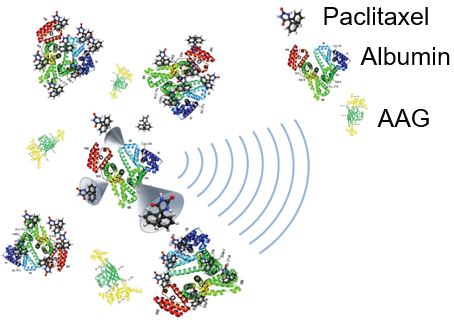
The research group at Brigham and Women’s Hospital and Harvard Medical School led by Seung-Schik Yoo, PhD, MBA, has demonstrated a new way to use low-intensity focused ultrasound (LIFU) to improve chemotherapy delivery in a mouse model of ovarian cancer. The chemotherapy agent tested, paclitaxel, is widely used to treat ovarian cancer, but more than 90% of the drug binds to albumin in the bloodstream, limiting the amount available to enter tumors.
In this preclinical study, researchers at Dr. Yoo’s Neuromodulation and Tissue Engineering Laboratory applied pulsed focused ultrasound to tumor sites to locally unbind paclitaxel from albumin, increasing the drug’s availability precisely where it was needed. The non-thermal LIFU technique temporarily disrupted the binding of the paclitaxel to plasma proteins and increased the amount of drug that reached the tumors.
In the mouse model tested, a single LIFU treatment nearly doubled the amount of paclitaxel within tumors while leaving bloodstream drug levels unchanged. Repeated treatments significantly suppressed tumor growth compared with chemotherapy alone.
Importantly, the treatment did not increase damage to surrounding tissues or organs, suggesting the approach could improve the effectiveness of existing drugs without adding systemic toxicity.
“This new noninvasive technique offers an elegant solution for the much-needed localized enhancement of chemotherapeutic delivery, specifically for agents with high blood-protein affinity, without altering systemic drug concentration,” said Dr. Yoo. “Because LIFU can be administered on-demand to match individual dosing schedules, it will mitigate the risks of off-target toxicity while avoiding the need for higher systemic doses. Furthermore, this approach allows for a reduced dosage to achieve therapeutic efficacy comparable to standard high-dose regimens—a critical advantage for patients with low drug tolerance. Beyond our initial focus on ovarian cancer, we aim to translate this platform for the treatment of cervical cancer and uterine serous carcinoma.”
“This study demonstrates a new way that focused ultrasound can improve the effectiveness of existing cancer drugs by increasing their availability at the tumor site,” said Frederic Padilla, PhD, the director of the Foundation’s Gene and Cell Therapy Program. “By locally modulating drug–protein interactions, this approach may allow us to enhance chemotherapy delivery while maintaining the same systemic dose.”
The findings highlight a novel strategy for using LIFU to enhance drug delivery and may have applications across other solid tumor indications in which protein binding limits therapeutic effectiveness.
This project was funded by the Focused Ultrasound Foundation.
See Anticancer Research (Open Access)
Related Stories
Foundation Research Awards Update: Five Preclinical Projects Initiated in the Second Quarter of 2024 July 2024
Investigator Profile: Q&A with Seung-Schik Yoo, PhD, MBA September 2015